Medellín, Colombia – A City of Transformation
2 days in Medellin

From the peaceful coffee-growing hills of Salento, we headed to Medellín, Colombia's second-largest city. After a rather long 10-hour bus journey with Occidental, we arrived in a city with a fascinating, sometimes tragic history, but one that has undergone an extraordinary transformation.
Medellín was once notorious for its drug cartels, violence and crime. Today, it is a vibrant, modern city with an impressive transport network, colourful neighbourhoods and a real sense of optimism. We were intrigued to discover how much the city had changed.
Staying in El Poblado
We chose to stay in El Poblado, a cosmopolitan, tourist-friendly district filled with restaurants, cafés and bars. It felt safe, lively and surprisingly modern.
Our accommodation was Hostal Noah, a comfortable hostel with a fantastic rooftop terrace. Our room had possibly the largest television we'd ever seen in a hostel, balanced out by one of the smallest bathrooms! But the rooftop more than made up for it and was a lovely place to relax.

Discovering Medellín – Metro, Cable Cars and Comuna 13
One of the highlights of our stay was a brilliant guided walking tour with The Best Tours in Medellín.
Our guide introduced us to Medellín's impressive public transport system, including its spotless metro and cable cars that climb high above the city into the surrounding hills.

The cable car journey was particularly memorable. Looking down over the densely packed houses stretching up the mountainsides gave us a completely different perspective on Medellín.
Comuna 13 – From Violence to Vibrant Street Art
One of the most memorable experiences of our time in Medellín was our guided visit to Comuna 13, a neighbourhood with an extraordinary and often heartbreaking history.
It's difficult to imagine that the colourful streets we walked through, filled with music, graffiti, cafés and tourists, were once part of one of the most dangerous areas of Medellín.

The Dark History of Medellín and Pablo Escobar
During the 1980s and early 1990s, Medellín became internationally notorious as the centre of Pablo Escobar's powerful drug cartel.
At the height of his influence, Escobar controlled a vast cocaine-trafficking operation, generating enormous wealth but also bringing violence, corruption and fear to the city.
His cartel was responsible for bombings, assassinations and attacks on police officers, politicians, journalists and ordinary civilians. Young men from poorer neighbourhoods were recruited into criminal gangs, and many families lived in constant fear.
In 1991 alone, more than 6,800 people were murdered in Medellín, making it one of the most violent cities in the world.
Although Escobar was killed in 1993, the violence didn't simply disappear. Criminal gangs, guerrilla groups and paramilitary organisations continued fighting for control of neighbourhoods and territory.
Comuna 13 was particularly badly affected. In 2002, a major military intervention known as Operation Orion attempted to regain control of the area from armed groups. The operation left a painful legacy, with civilians caught in the violence, families displaced and allegations of serious human rights abuses.
Hearing about this history while standing in the very streets where so much had happened was incredibly moving.
The Remarkable Transformation of Comuna 13
What makes Comuna 13 so fascinating today is the determination of its residents to change the future of their neighbourhood.
Over the years, local artists, musicians and community groups have helped transform the area through graffiti, hip-hop, dance and cultural projects.

The colourful murals aren't simply decorations. Many tell stories of violence, loss, hope and resilience. Our guide explained how street art has become a way for residents to remember the past while celebrating a more positive future.
As we walked through the narrow streets, there was music playing, street performers entertaining visitors and colourful artwork everywhere we looked.
It was a remarkable contrast to the stories we had just heard.
The Outdoor Escalators – A Brilliant Idea
One of the most impressive examples of Medellín's regeneration is the outdoor escalator system built into the steep hillside of Comuna 13.

Before the escalators were installed, residents faced a climb of around 350 steps to reach their homes. Imagine having to tackle that every day, carrying shopping, taking children to school or simply returning home after work.
The new escalators, introduced in 2011–2012, transformed access to the neighbourhood.
The system consists of six linked sections of outdoor escalators, taking residents and visitors up the hillside without the exhausting climb.

What makes them so special is that they weren't originally built as a tourist attraction. They were designed to improve everyday life for local people, particularly those living in the higher parts of the community.
Today, the escalators have also helped open the area to tourism, bringing visitors and new business opportunities to the neighbourhood.
The Views from the Top
As we made our way higher, the views became increasingly impressive.
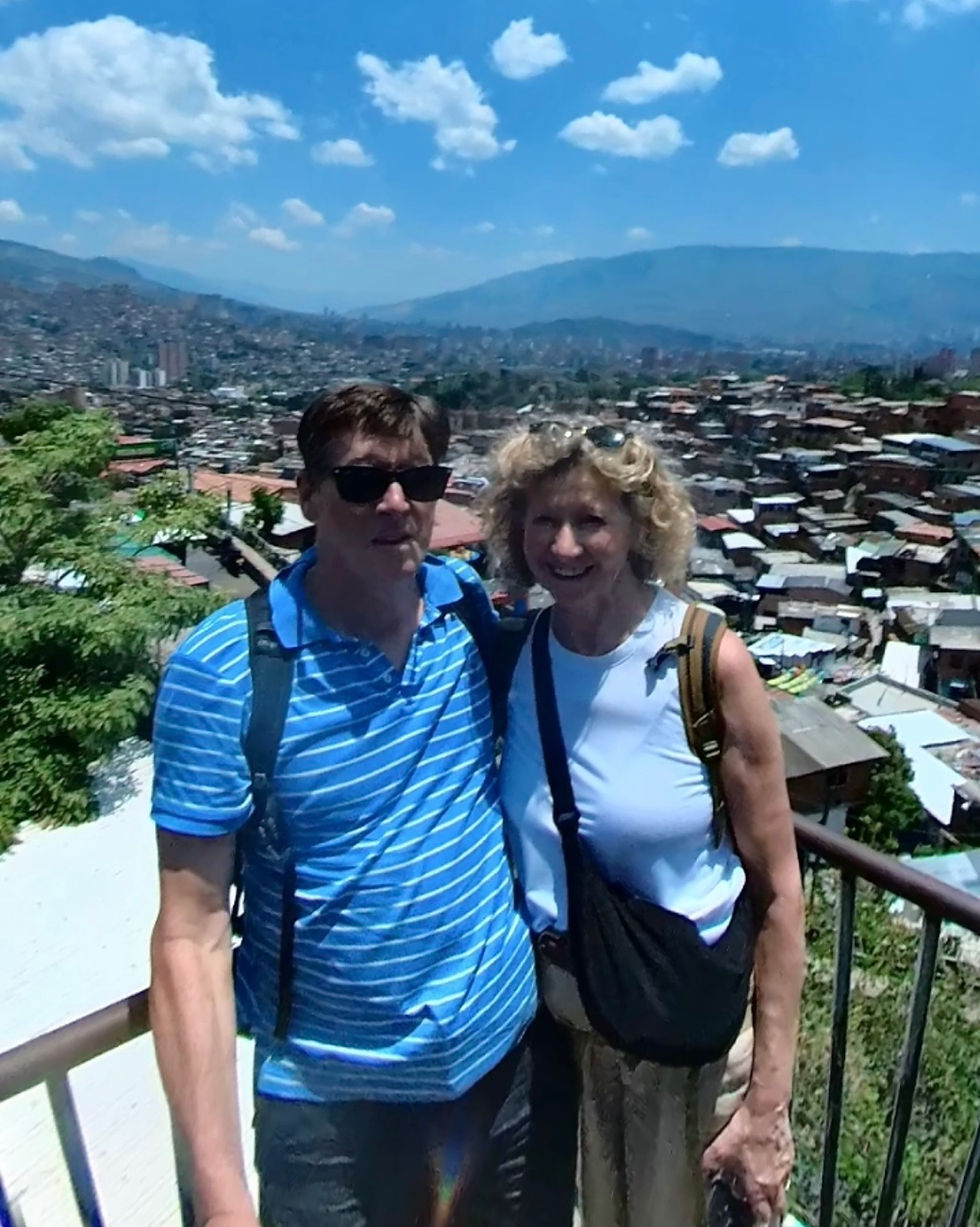
From the upper viewpoints, we could look out across the densely packed houses of Comuna 13, with their flat rooftops, colourful walls and narrow streets clinging to the mountainside.

Beyond them, Medellín stretched across the Aburrá Valley, surrounded by enormous green mountains.
It was an incredible sight and really brought home the scale of the city and the challenges of building communities on such steep terrain.
Standing above the neighbourhood, looking down at the colourful streets and bustling activity below, it was hard to reconcile what we were seeing with the violent history our guide had described.
Medellín's Cable Cars – More Than Just a Tourist Experience
Another highlight of our tour was discovering Medellín's impressive public transport network.
The city's metro system opened in 1995, and in 2004 Medellín introduced its first Metrocable line, connecting hillside communities with the main transport network.
The cable cars glide high above the rooftops, providing spectacular views of the city below.
For us, it was a wonderful sightseeing experience, but for thousands of residents, these cable cars have made a huge difference to everyday life.
Previously, people living high on the mountainsides often faced long and difficult journeys into the city centre for work, education and healthcare.
The cable cars have helped connect these communities to the rest of Medellín, reducing travel times and making previously isolated neighbourhoods much more accessible.
We were particularly impressed by how clean, efficient and well-organised the whole transport system was.
The fact that we could travel around the city using the metro, cable cars and connecting services made exploring Medellín so much easier.
Why Comuna 13 Was So Memorable
Of everything we experienced in Medellín, Comuna 13 probably left the biggest impression.
It wasn't simply the graffiti, the outdoor escalators or the fantastic views. It was hearing the stories behind the transformation and understanding just how much the local community had endured.
The neighbourhood still faces challenges, and its difficult past hasn't been forgotten. But the determination of its residents to create a better future was inspiring.
For us, Comuna 13 was much more than a tourist attraction. It was a powerful reminder of how communities can rebuild and reinvent themselves.
If you're visiting Medellín, we'd absolutely recommend taking a guided tour of Comuna 13. Understanding the history makes the experience so much more meaningful.
Art and Culture – Museo de Antioquia
After our tour, we took the metro into La Candelaria to visit the Museo de Antioquia and nearby Plaza Botero.

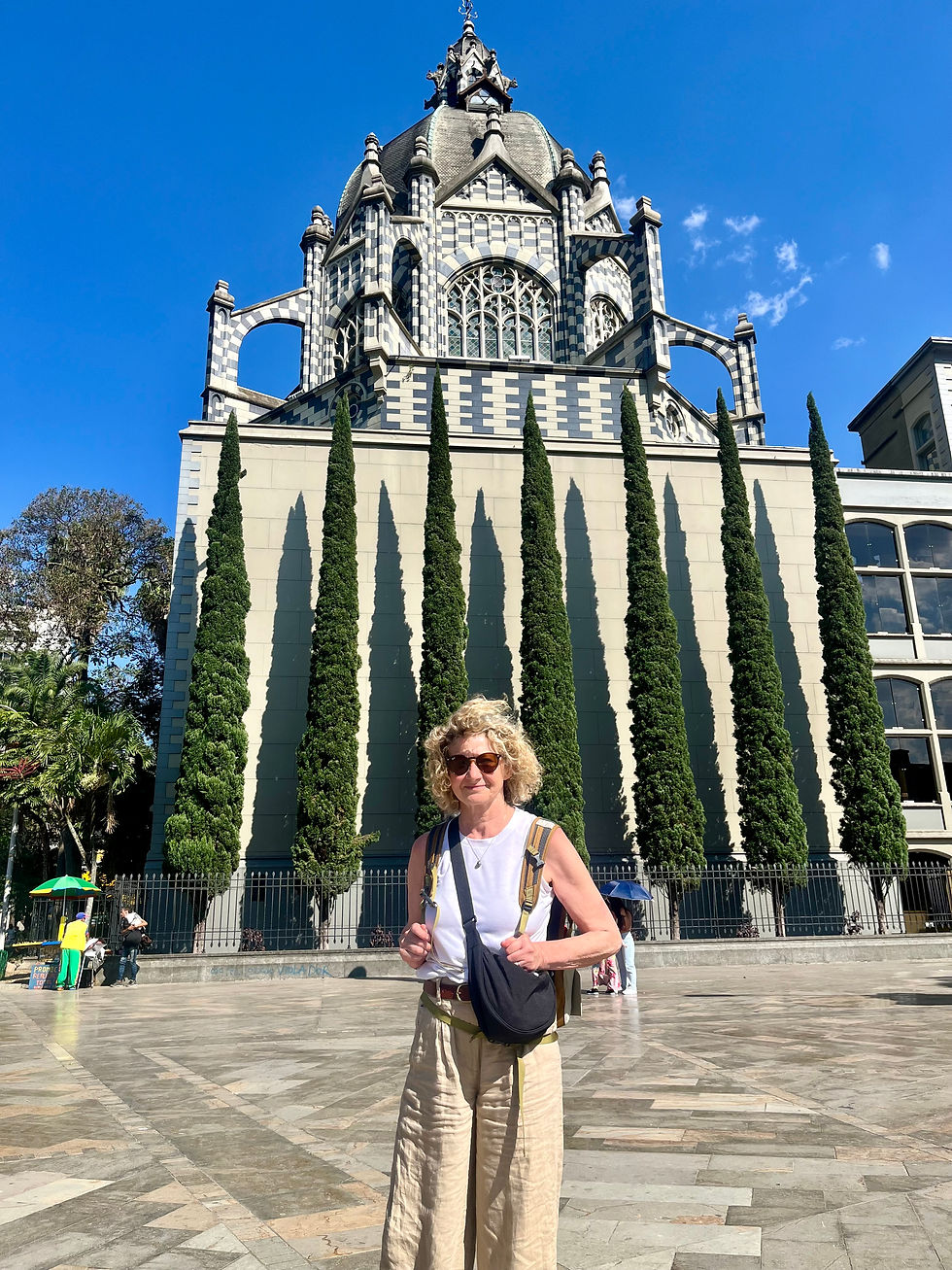
The square is filled with enormous bronze sculptures by the famous Colombian artist Fernando Botero, whose distinctive rounded figures are instantly recognisable.
Inside the museum, the top floor is dedicated to Botero's work, alongside other collections of Colombian art.
The surrounding area felt noticeably edgier than El Poblado, and we had been advised not to linger there late in the afternoon. Nevertheless, the museum and sculptures were well worth visiting.
Eating Out in Medellín
We had some of our best food in Colombia during our stay in Medellín.
Mamasita was a particular favourite, with fantastic food, a lively atmosphere and a rather indulgent Aperol Spritz! It was one of those evenings when we decided to stretch the budget a little.

We also enjoyed Gabo, another excellent restaurant with a great vibe and reasonably priced food.
Medellín certainly delivered when it came to eating out.
Our Thoughts on Medellín
We arrived in Medellín knowing about its troubled reputation but left with a very different impression.
The areas we visited felt cleaner, more modern and, in many ways, safer than we had expected. The public transport was excellent, the food was fantastic and the people we met were welcoming.
Most importantly, the visit to Comuna 13 gave us a deeper understanding of the city's history and the extraordinary efforts made by its communities to rebuild.
Medellín is a city of contrasts, and that's exactly what makes it such a fascinating place to visit.
Our Medellín Travel Tips
Getting there: Occidental bus from Salento, approximately 10 hours.
Where we stayed: Hostal Noah, El Poblado – comfortable accommodation with a brilliant rooftop terrace. Instagram: @noahhostelsmedellin.
Best experience: Guided city, metro, cable car and Comuna 13 tour with @thebesttoursinmedellin.
Don't miss: Museo de Antioquia and the Botero sculptures in Plaza Botero.
Where we ate: Mamasita (@mamasitamedallo) and Gabo (@gabo.mde).
Getting around: The metro and cable cars are excellent. We found that one ticket allowed us to travel around the network for up to 90 minutes, provided we stayed within the permitted system. Check current ticket rules before travelling.
Useful extra: Uber made getting around the city straightforward and helped us know the fare in advance.


Comments